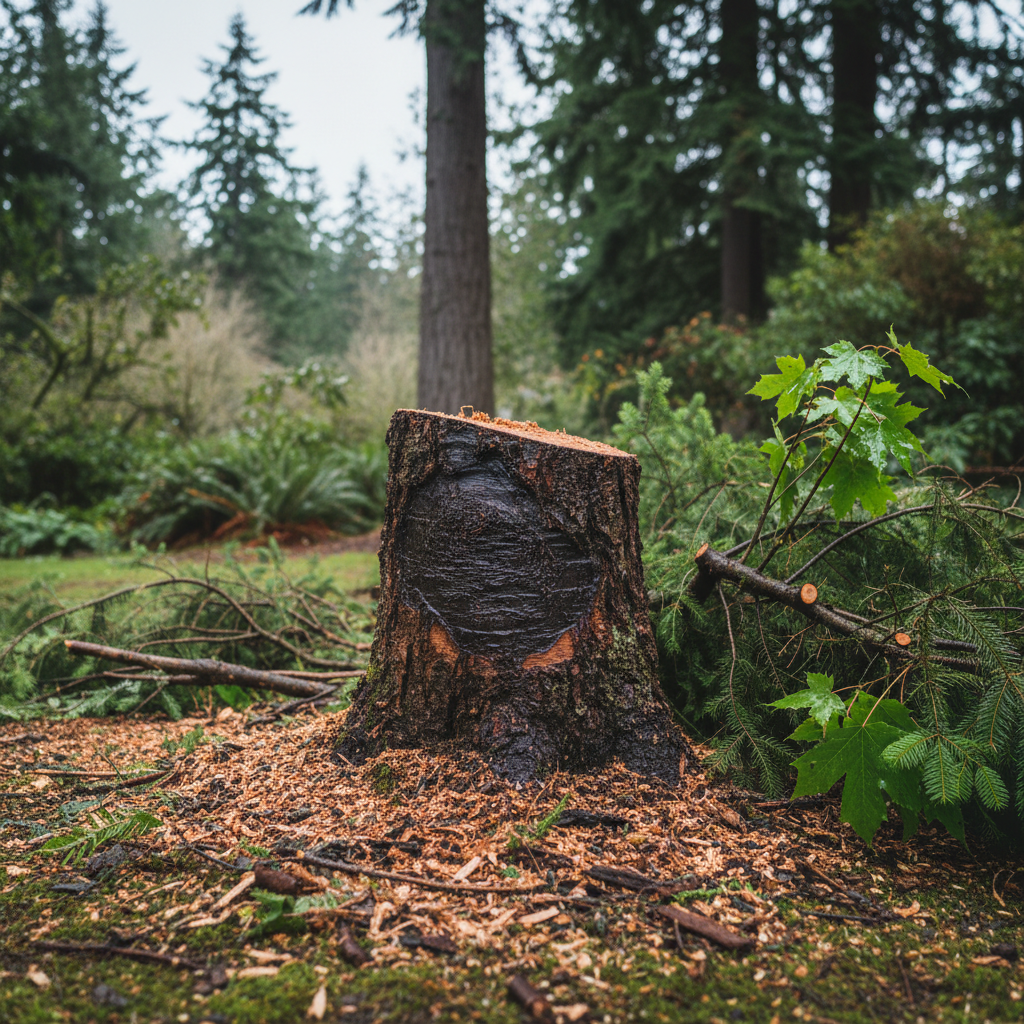
You've got trees on your property, and if you're like most folks around Bremerton, you probably have a few questions about keeping them healthy and looking good. I get calls all the time from homeowners asking pretty much the same stuff. So, I figured I'd lay it all out here, no nonsense, just what I've learned from years of working with trees right here in Kitsap County.
What's the best time of year to prune my trees?
This is probably the most common question I hear. For most deciduous trees – that's the ones that drop their leaves in the fall – the best time to prune is late winter or early spring, before the new growth really kicks in. The tree is dormant, so it's less stressed, and you can see the branch structure clearly without all the leaves in the way. It also gives the pruning wounds time to start healing before insects and diseases become super active in warmer weather.
Now, there are exceptions. If you've got a tree that blooms in early spring, like a flowering cherry or dogwood, you'll want to prune it right after it finishes flowering. If you prune those in late winter, you'll be cutting off all the flower buds for that year. For evergreens, you can often do light pruning any time, but heavy structural pruning is still best in late winter or early spring.
How do I know if my tree is sick or dying?
This is a big one, and it can be tough to tell sometimes. The first thing I tell people to look for is changes. Is the canopy looking thinner than usual? Are there dead branches, especially up near the top? Are the leaves discolored, wilting, or dropping prematurely? You might see mushrooms or other fungi growing on the trunk or around the base, which can be a sign of decay.
Cracks in the trunk, peeling bark, or large cankers (sunken, discolored areas) are also red flags. Sometimes, you'll see sawdust near the base or exit holes from insects. If you're seeing any of these things, don't just hope it gets better. It's time to get a professional out there to take a look. We've got a lot of bigleaf maples and red alders around here, and they can get stressed, especially if they're in a wet spot or have root damage.
My tree is close to my house. Is it a hazard?
Any tree near a structure has the potential to be a hazard, but it's not always as simple as 'big tree = big danger.' What I look for are things like dead or broken branches hanging over the roof, significant leans, or large cavities in the trunk. The type of tree matters too; some species are more prone to limb failure than others. We get some pretty strong winds coming off the Puget Sound, especially in the fall and winter, so a compromised tree can quickly become a serious problem.
Also, check for signs of root heave near your foundation or driveway. If the tree is too close and its roots are pushing up concrete or cracking your foundation, that's a different kind of hazard. A good arborist can assess the tree's health, structural integrity, and the likelihood of failure. Don't wait until a storm hits to worry about it.
Do I need to fertilize my trees? If so, how often?
Most established, healthy trees in a natural setting don't really need regular fertilization. They usually get what they need from the soil and decomposing organic matter. However, if your tree is showing signs of nutrient deficiency – like pale leaves, stunted growth, or a general lack of vigor – or if it's in a highly disturbed urban environment with compacted soil, then fertilization might help.
If you do fertilize, it's not like feeding your lawn. You want a slow-release granular fertilizer or a deep root feeding. The best time is usually in the fall or early spring. Don't overdo it; too much fertilizer can actually harm a tree. It's always best to get a soil test done first to see what nutrients are actually missing. That way, you're not just guessing.
Can I prune my trees myself, or should I hire a professional?
For small, accessible branches that you can reach safely from the ground with hand pruners or a pole saw, sure, you can probably handle it. Removing small dead twigs or shaping a young tree is fine. But for anything more substantial – branches that require a ladder, anything near power lines, or cuts that require a chainsaw – you absolutely should hire a professional.
Tree work is dangerous. Seriously dangerous. I've seen too many accidents where homeowners try to tackle a job that's over their head. Plus, improper pruning can do more harm than good to a tree's health and structure. A certified arborist knows how to make the right cuts in the right places to promote healing and maintain the tree's integrity. We've got the right gear and the training to do it safely and effectively. That's why Bremerton Tree Service is here.
How do I protect my trees during construction or landscaping?
This is a critical one, and it's often overlooked until it's too late. Tree roots extend much further than you think – often two to three times the width of the canopy. Construction equipment, trenching, soil compaction, or even just piling materials around the base of a tree can cause serious, irreversible damage to the root system.
If you're doing any work near a tree, set up a 'tree protection zone' around it. This means putting up fencing at least to the drip line (the edge of the canopy) and making sure no equipment, materials, or even foot traffic enters that zone. Don't change the soil grade around the tree, either by adding or removing soil. If you have to dig near a tree, consider hand digging or using an air spade to avoid tearing roots. Protecting the roots is just as important as protecting the trunk and branches.